

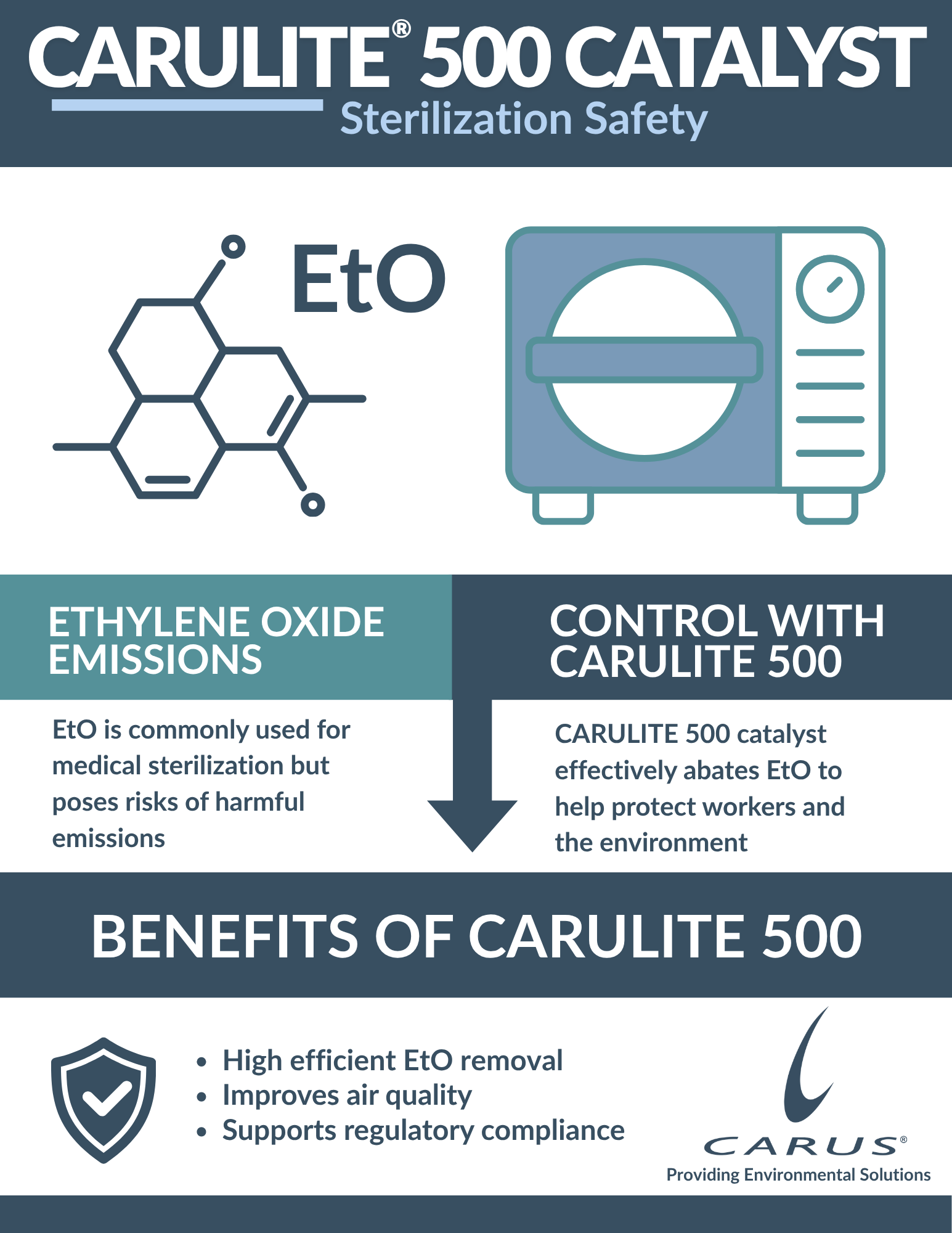
Ethylene oxide (EtO) remains essential in many critical industrial applications, including medical device sterilization, pharmaceutical manufacturing, and specialty chemical production. Its effectiveness as both a sterilant and chemical intermediate makes substitution difficult in the near term.
At the same time, EtO is recognised as a hazardous air pollutant and carcinogenic substance, leading to heightened attention across Europe. As regulatory scrutiny increases under evolving EU environmental and occupational safety frameworks, operators are placing greater emphasis on emissions control technologies that are not only compliant, but also reliable, energy-efficient, and sustainable over the long term.
Table of Contents
Ethylene Oxide Emissions: A Growing Regulatory Focus in the EU
Ethylene oxide is classified in Europe as a carcinogen, and long-term exposure, even at low concentrations, has been associated with significant health risks. As a result, EU authorities and national regulators are increasing expectations around emissions monitoring and abatement, particularly for facilities located near population centres.
For European manufacturers, this introduces several operational challenges:
- Meeting increasingly stringent emissions limits under EU and national permitting requirements
- Demonstrating consistent destruction and removal efficiency (DRE)
- Ensuring stable control performance during start-up, shutdown, and process variability
- Maintaining compliance with evolving industrial emissions and workplace exposure expectations
Facilities relying on older thermal or catalytic systems may find these approaches increasingly difficult to operate efficiently under today’s European standards, particularly where energy use and carbon footprint are also key considerations.
Catalytic Oxidation: A Proven Solution for EtO Control
Catalytic oxidation is one of the most effective and widely adopted technologies for controlling ethylene oxide emissions. In this process, EtO is converted into carbon dioxide and water vapour at significantly lower temperatures than required for thermal oxidation.
This lower-temperature operation is particularly important in the European context, where energy efficiency and decarbonisation pressures are growing alongside regulatory compliance needs.
Catalytic oxidation systems offer several key advantages:
- High destruction and removal efficiencies
- Lower operating temperatures compared with thermal oxidation
- Reduced fuel consumption and operating costs
- Reliable performance over extended operating periods
At the centre of these systems is the catalyst itself, the component that ultimately determines efficiency, durability, and long-term operating stability.
The Importance of Catalyst Performance in Real-World EU Conditions
Not all catalysts perform equally under real industrial conditions. When evaluating catalytic solutions for EtO abatement in European facilities, several factors are critical:
- Low-temperature activity: achieving high conversion at reduced operating temperatures
- Durability: resistance to deactivation from contaminants or thermal cycling
- Pressure drop optimisation: minimizing system resistance and fan energy demand
- Operational stability: consistent performance under variable flow rates and EtO concentrations
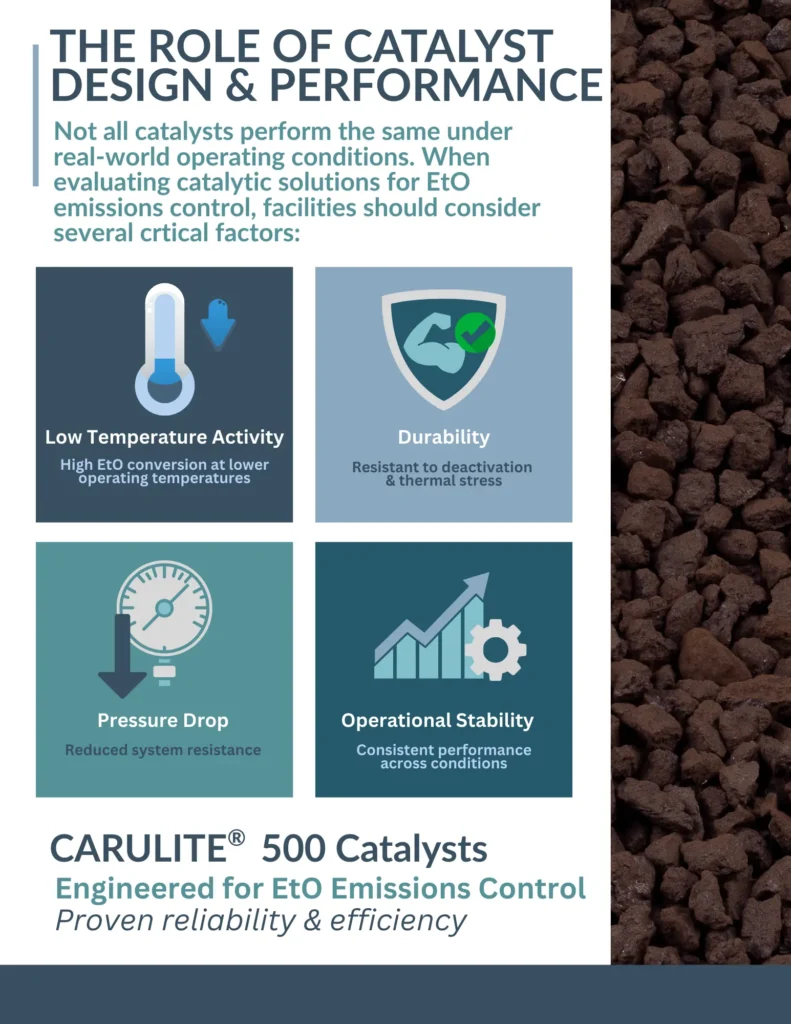
CARULITE® 500 catalyst, developed and manufactured by Carus, is engineered specifically to meet these demands. Its proven performance in ethylene oxide destruction applications helps European facilities maintain compliance while improving operational efficiency and reliability.
Carus EU Expertise in Catalyst-Driven EtO Emissions Control
Carus’ contribution to EtO emissions control is focused on the catalyst itself. While full system design, integration, and commissioning are typically handled by engineering firms and emissions-control OEM partners, Carus provides catalyst-specific technical expertise to support successful EtO abatement projects across Europe.
This includes:
- Guidance on catalyst selection based on process conditions and EtO concentrations
- Technical input on operating windows, temperature requirements, and expected performance
- Recommendations to support catalyst longevity and sustained activity under normal operating conditions
By clearly defining the catalyst’s role within the overall abatement system, Carus helps European OEMs, engineering partners, and end users apply catalytic solutions confidently and effectively.
Looking Ahead
As European regulations continue to evolve and expectations around emissions transparency and environmental responsibility increase, proactive EtO emissions management is no longer optional. It is a critical component of sustainable industrial operations.
By investing in proven catalytic abatement technology, such as CARULITE® 500, and working with experienced catalyst suppliers, facilities can reduce compliance risk, improve efficiency, and demonstrate a clear commitment to protecting both people and the environment.
Interested in Learning More?
Carus supports customers across Europe with reliable, high-performance ethylene oxide abatement solutions backed by deep technical expertise and hands-on catalyst support.