

Your Resource Hub for Success
At Carus, we are committed to empowering your business or municipality with reliable, high-quality products and expert support. Our resource hub offers a wealth of information, including webinars, case studies, product safety summaries, and more, to ensure you have everything you need to make informed decisions. With a focus on safety, sustainability, and innovation, we strive to deliver consistent value, exceed expectations, and provide solutions tailored to your needs. Explore our resources and discover how Carus can help drive your success.

Webinars
Data Sheets
Permanganate
- AQUOX® potassium permanganate ACS reagent grade
- AQUOX® potassium permanganate pharma grade
- AQUOX® potassium permanganate free flowing grade
- AQUOX® potassium permanganate technical grade
- CARUSOL® liquid permanganate
- CARUSOL® C liquid permanganate
- LIQUOX® sodium permanganate
- RemOx® L ISCO reagent
- RemOx® S ISCO reagent potassium permanganate
Phosphates
Case Studies / Literature
Phenol Problem Solved at Wastewater Facility
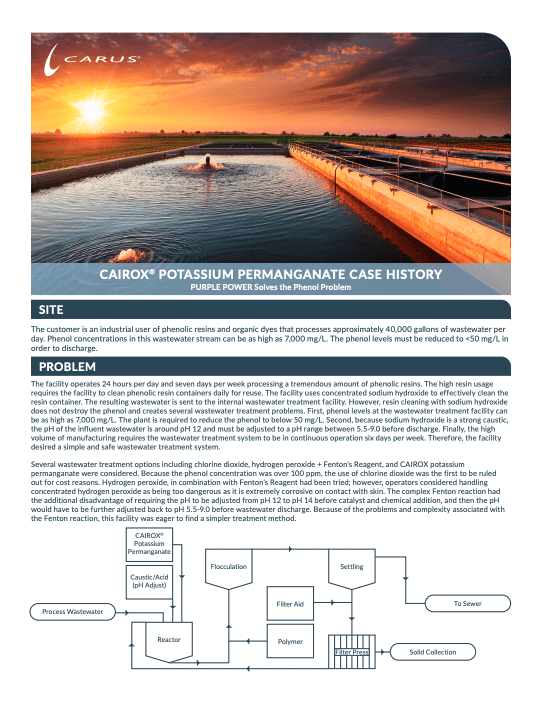
Phenol Problem Solved at Wastewater Facility
An industrial user of phenolic resins and organic dyes that processes approximately 40,000 gallons of wastewater per day. The phenol concentrations can be as high as 7,000 mg/L. The phenol levels must be reduced to <50 mg/L prior to discharge.
The facility operates 24 hours per day and seven days per week processing a tremendous amount of phenolic resins. The high resin usage requires the facility to clean phenolic resin containers daily for reuse.
Proving 99.99%+ EtO Destruction Removal Efficiency for CARULITE 500® Catalyst
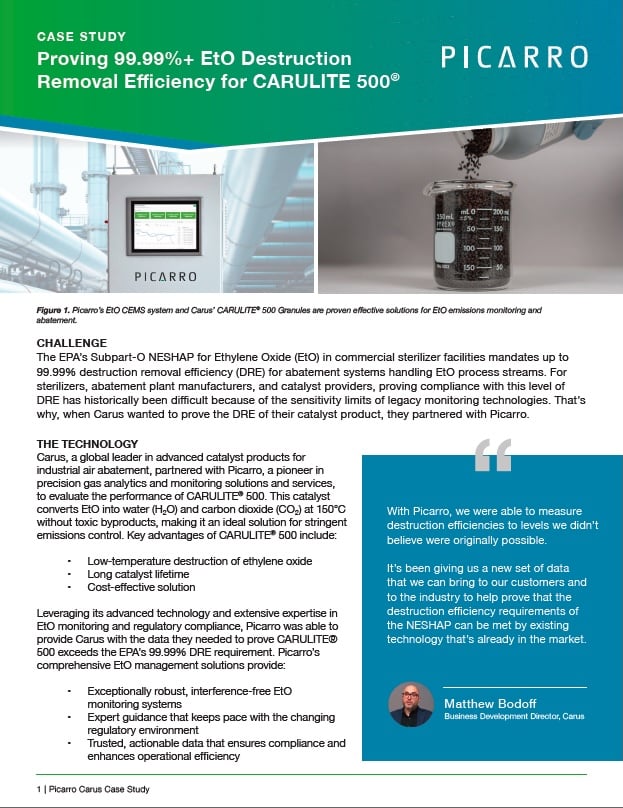
Exceeding EtO Emissions Compliance Standards
Controlling ethylene oxide (EtO) emissions requires abatement systems capable of extremely high destruction efficiency, along with reliable monitoring to verify performance.
Carus and Picarro have demonstrated that CARULITE® 500 catalyst achieves an exceptional 99.99988% DRE, supported by advanced, real-time emissions monitoring. Together, this solution helps support regulatory compliance, operational confidence, and environmental stewardship across global markets.
Radium Removal from Drinking Water Technical Brief
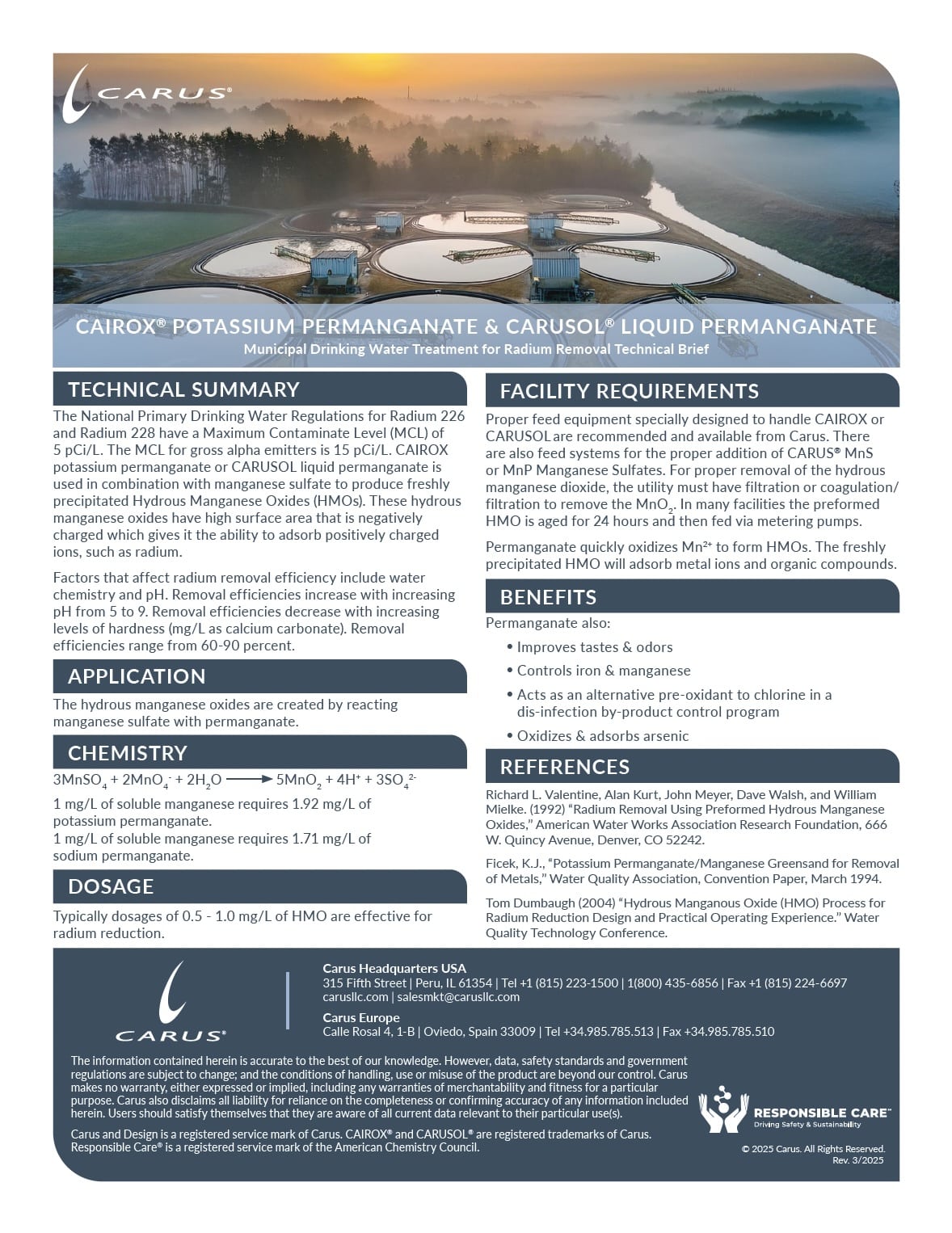
Optimize Radium Removal with Permanganate Treatment
Municipal Drinking Water Treatment for Radium Removal Technical Brief
Optimize Radium Removal with Permanganate Treatment
Meeting the National Primary Drinking Water Regulations for Radium 226 & 228 (MCL of 5 pCi/L) and gross alpha emitters (MCL of 15 pCi/L) requires effective treatment strategies. CAIROX® potassium permanganate or CARUSOL® liquid permanganate, combined with manganese sulfate, forms Hydrous Manganese Oxides (HMOs)—high-surface-area compounds that effectively adsorb radium.
Download our resource to explore:
✔ How HMOs enhance radium removal
✔ Optimal pH and water chemistry conditions for efficiency
✔ Proper feed equipment & system considerations
Learn how Carus solutions can help you achieve up to 90% radium removal efficiency. Get the full details today!
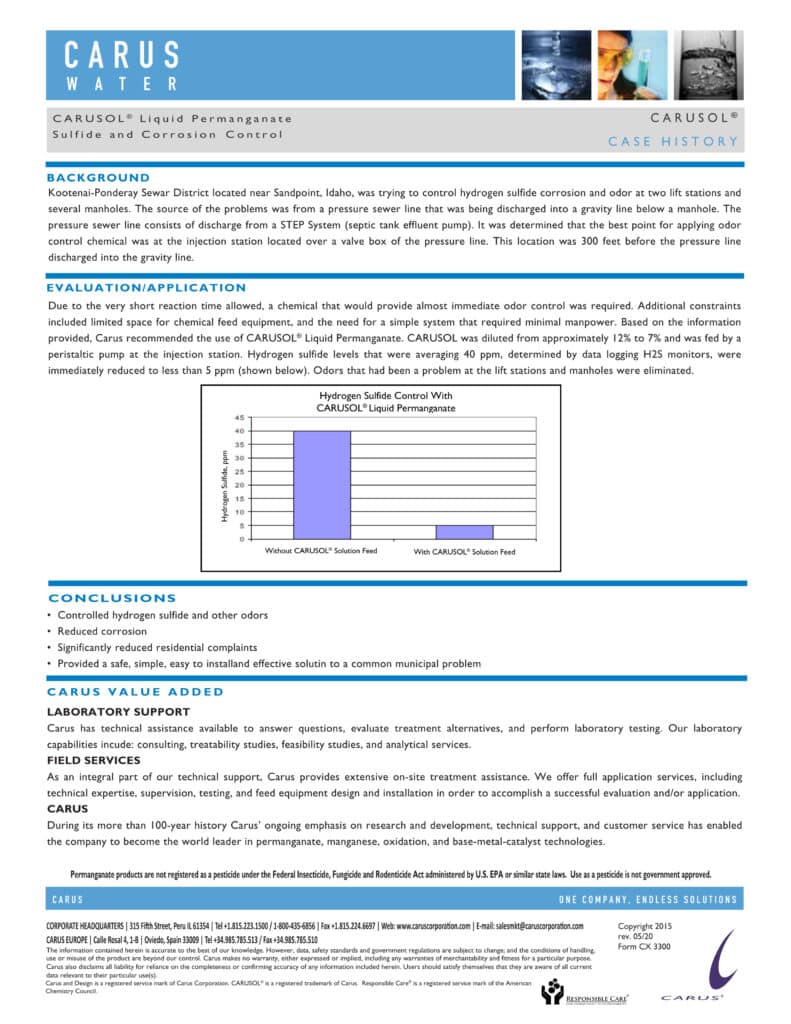
Sulfide and Corrosion Control
Sulfide and Corrosion Control
Kootenai-Ponderay Sewar District located near Sandpoint, Idaho, was trying to control hydrogen sulfide corrosion and odor at two lift stations and several manholes. The source of the problems was from a pressure sewer line that was being discharged into a gravity line below a manhole. The pressure sewer line consists of discharge from a STEP System (septic tank effluent pump). It was determined that the best point for applying odor control chemical was at the injection station located over a valve box of the pressure line.
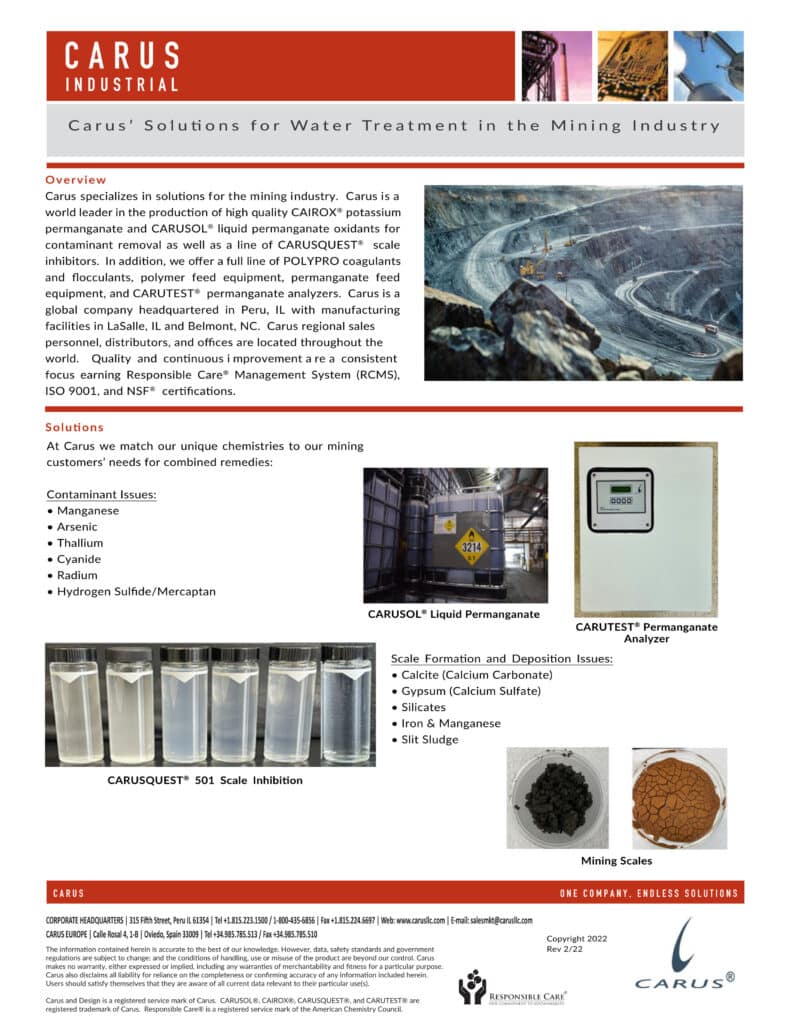
Solutions for the Mining Industry
Solutions for the Mining Industry
Carus specializes in solutions for the mining industry. Carus is a world leader in the production of high quality CAIROX® potassium permanganate and CARUSOL® liquid permanganate oxidants for contaminant removal as well as a line of CARUSQUEST® scale inhibitors. In addition, we offer a full line of POLYPRO coagulants and flocculants, polymer feed equipment, permanganate feed equipment, and CARUTEST® permanganate analyzers.